Buying guide · Updated 2026-08-03
Best Garage Heaters for 2-Car Garages
Ranked electric garage heater picks for 2-car garages: 5,000 W, 7,500 W, and 10,000 W hardwired units sized by square feet, insulation, and ceiling height.

A 2-car garage is typically 400-600 sq ft with a big uninsulated door and 8-10 ft ceilings-exactly the space where electric fan-forced garage heaters shine: no fuel storage, no combustion air, and heat at the bench within minutes.
ForgeGate stocks this category in three wattages-5,000 W, 7,500 W, and 10,000 W-all hardwired 240 V units with wall/ceiling mounting, remote control, and 9-hour timers. This guide ranks them by garage profile.
Sizing math first: square feet, insulation, ceiling height
Rule of thumb: budget about 10 W per square foot for an insulated garage, more if the doors are uninsulated or the ceiling is tall. A 450 sq ft insulated 2-car wants roughly 4,500-5,000 W; uninsulated doors and 10 ft ceilings push the same footprint toward 7,500 W.
In BTU terms: 5,000 W is about 17,000 BTU, 7,500 W about 25,600 BTU, and 10,000 W about 34,100 BTU. If the garage is detached and leaky, size up one band.
Pick 1: 5,000 W for insulated 2-car and oversized 1-car garages
The 5,000 W unit is the pick for insulated garages up to roughly 450 sq ft with standard 8 ft ceilings, especially if you work in one bay rather than heating the whole volume. It is also the easiest on the electrical panel.
Best fit: daily-driver garages, weekend workshops, and spaces where the door mostly stays closed.
Pick 2: 7,500 W for the average 2-car garage
7,500 W is the default pick for 450-600 sq ft 2-car garages with average insulation-the most common footprint. That is 25,600 BTU of fan-forced heat, enough to pull a cold start to working temperature in a sensible time.
Choose this band if you open the door regularly to move cars; every opening dumps the warm air and the heater has to rebuild it.
Pick 3: 10,000 W for tall ceilings, cold climates, and working bays
The 10,000 W unit is for 2-car garages with 10 ft-plus ceilings, uninsulated doors, deep-winter regions, or day-long use with the door cycling. About 34,100 BTU gives it recovery headroom the smaller units cannot match.
The price is electrical: confirm circuit capacity before checkout, not after delivery.
Wiring, mounting, and features that matter
All three picks are 240 V hardwired units-plan a dedicated circuit sized to the wattage, with breaker and wire gauge specified by your electrician. This is not plug-in territory.
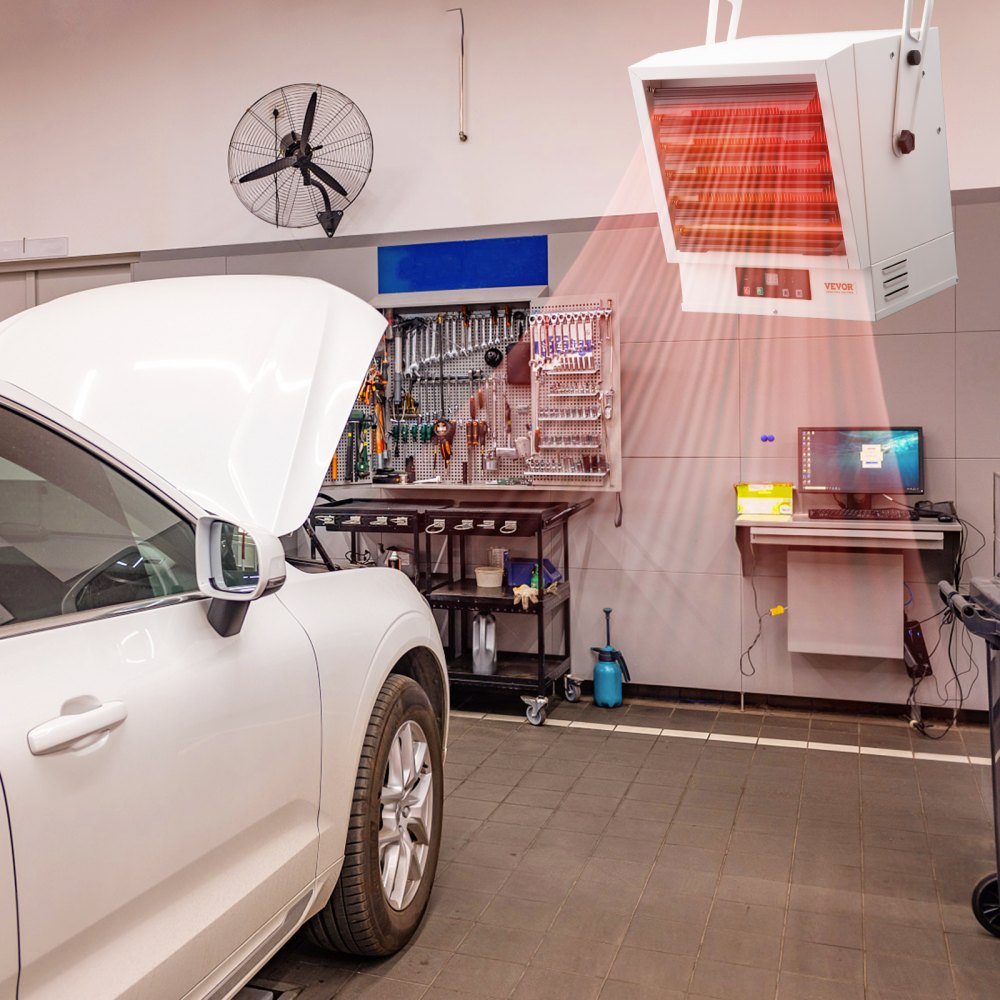
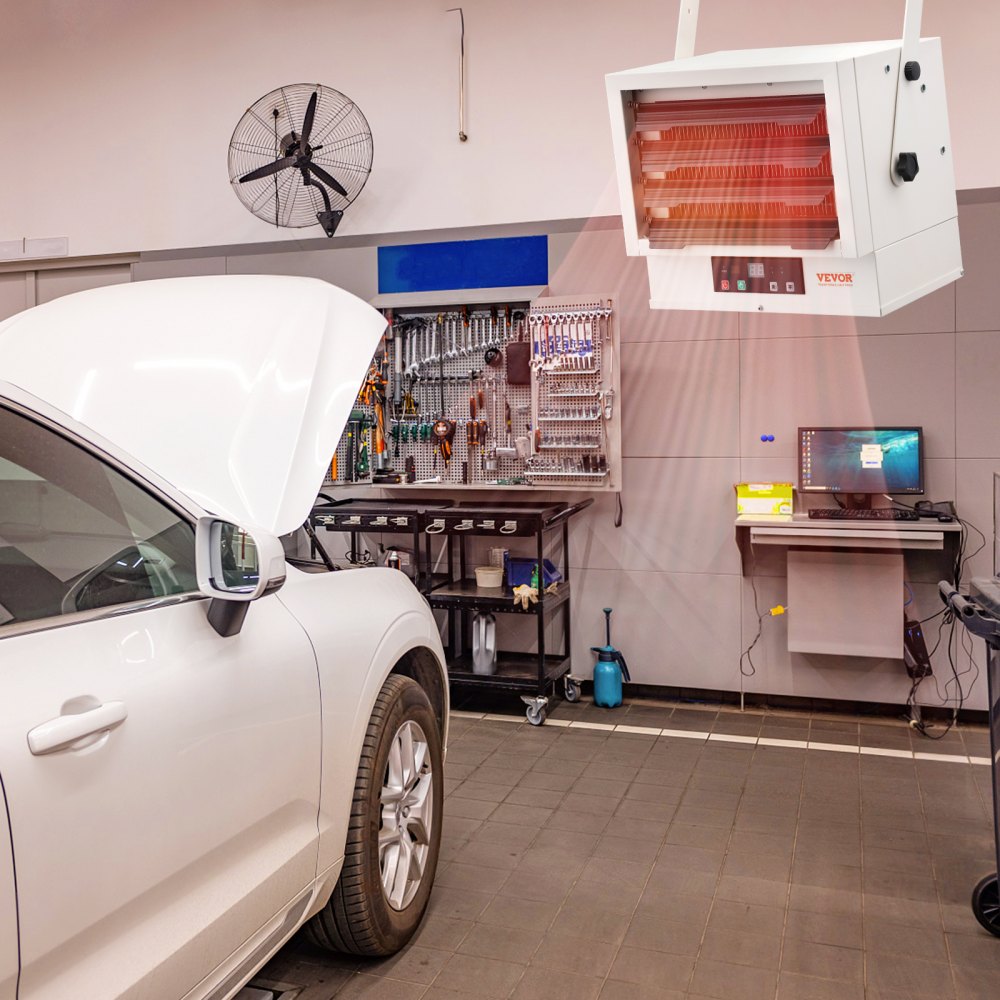
Wall or ceiling mounting with directed louvers puts heat at bench height instead of the roof peak. The remote, 9-hour timer, and overheat protection on these ETL-listed units are what let a garage heater run unattended through a workday.
Guide FAQ
What size breaker do these heaters need?
They are hardwired 240 V loads; the circuit must be sized to the unit's wattage by an electrician. Do not share the circuit with other heavy loads.
Ceiling mount or wall mount?
Ceiling or high-wall, with louvers angled at the work zone, keeps heat where you are instead of stratifying it at the roof.
Electric or propane for a 2-car garage?
Propane delivers big BTU numbers but brings combustion air and moisture concerns; electric fan-forced is the cleaner answer in wired, insulated garages.
How fast will the garage warm up?
It depends on starting temperature and insulation. Expect a cold garage to need a pre-heat window-that is what the timer is for-not instant comfort.