Buying guide · Updated 2026-08-03
Convection Ovens for Small Bakeries: Sizing and Power Guide
Size a convection oven for a small bakery by worst-hour batch volume and power needs: 120 V half-size units vs full-size 208-240 V decks, rack by rack.
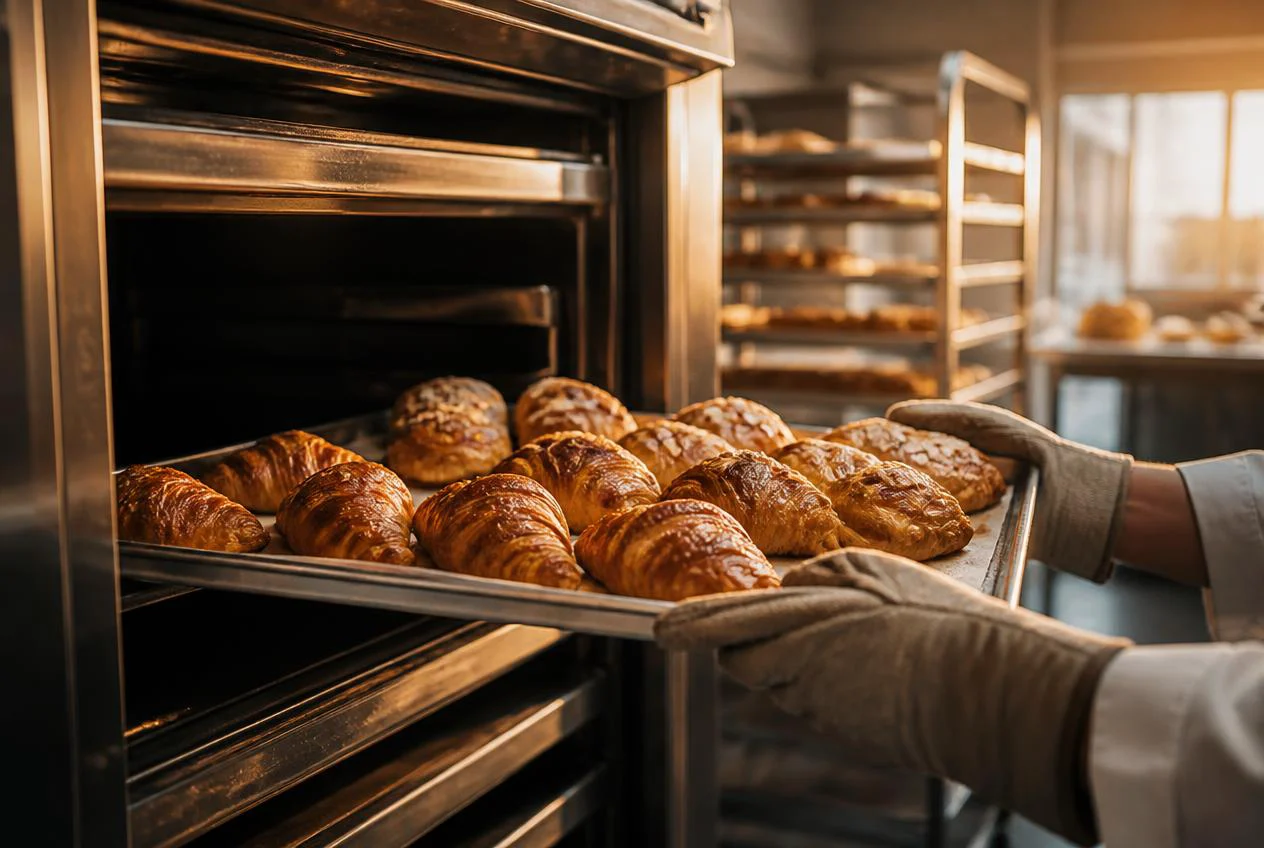
A small bakery's oven decision has two hard constraints: worst-hour batch volume and the electrical service in your room. Pick the capacity first, then let the power requirement decide whether the oven plugs into the wall you have or needs an electrician.
ForgeGate's convection line spans three rungs-two 120 V half-size units and a full-size 208-240 V deck-which makes the sizing story concrete.
Size to your worst-hour batch, not the average day
Write down what must come out in your busiest hour-say 4 trays of croissants plus 2 sheet cakes-and count the rack positions that demands. Buying for an average Tuesday means the oven becomes the bottleneck every Saturday.
Convection bakes faster and more evenly than still air, so throughput per rack beats a conventional recipe book's expectations; the constraint becomes how many racks you can load and pull per cycle.
Half-size 120 V: the plug-in rungs
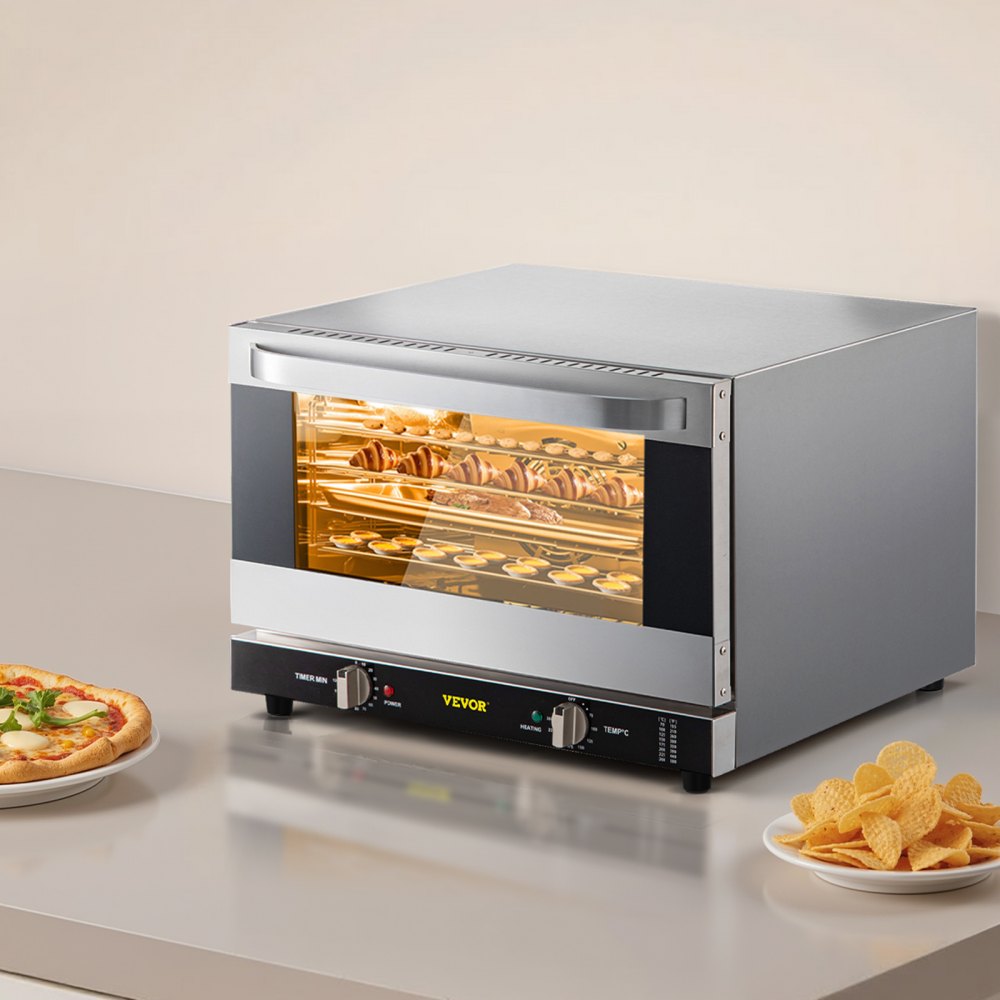
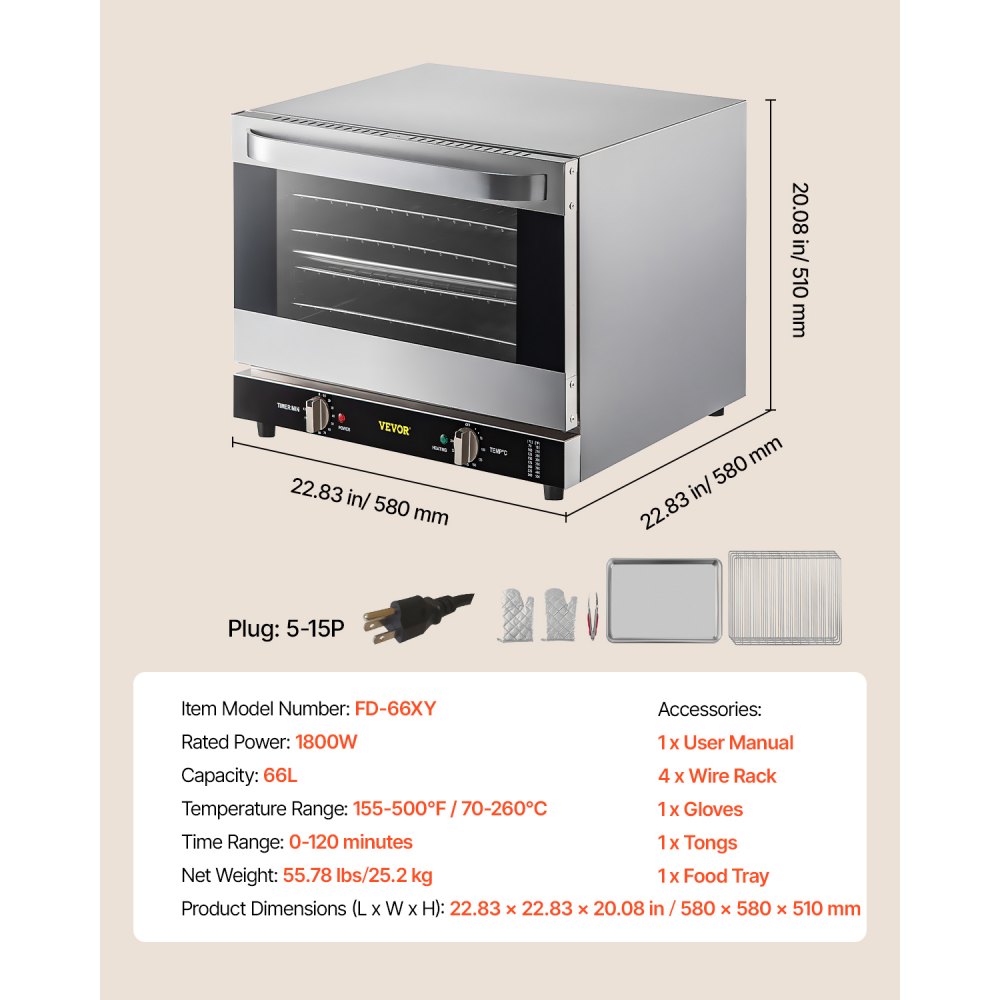
The 47 L / 43 qt half-size unit runs 1,600 W on standard 120 V; the 66 L / 60 qt runs 1,800 W, also 120 V. Both are 4-tier countertop units with front glass doors, sized around half-sheet pans.
These are the right first ovens for cafes, farmers-market bakeries, and ghost kitchens: no electrical work, bench-mountable, and two of them in parallel can out-produce one big deck while giving you bake redundancy.
Full-size 208-240 V: when volume demands it
The full-size rung in our line is 4.24 cu ft with 4 racks that take full-size pans, at 5,000 W on 208-240 V. That is where production bakeries live: full-sheet throughput per cycle.
The wiring is the gate. 5,000 W at 240 V wants a dedicated circuit and the correct plug/receptacle pairing-confirm service capacity before ordering, not on install day.
Capacity math: 43 qt vs 60 qt vs full-size
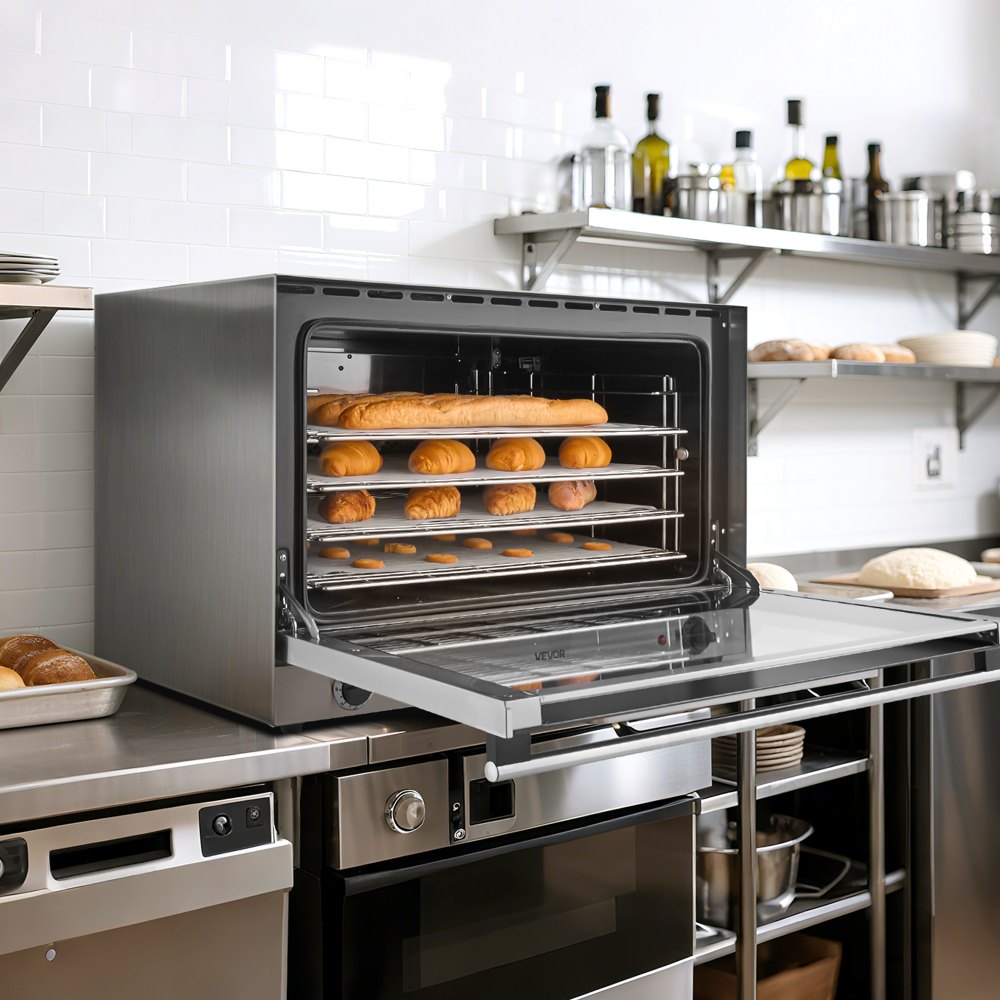
Think in racks and pans: 4 tiers in the half-size class means 4 half-sheets per bake, and the 60 qt adds interior height for taller items plus better airflow around loaded racks.
If your Saturday peak needs 8 half-sheets at once, the honest answers are the 60 qt with staggered bakes, or two units-one for throughput and one for backup. In a bakery, a dead oven is a closed sign.
Airflow, temperature, and loading discipline
Fan-driven air transfers heat faster: drop roughly 25 F from conventional recipe temperatures and start checking earlier. Rotate racks mid-bake if your unit's airflow is not perfectly even.
Do not overpack: pans too close to each other and the walls shadow the airflow, producing the uneven browning people blame on the oven.
Venting, clearance, and the rest of the bench
Leave the manufacturer's clearance behind and above the unit; hood and ventilation requirements vary by jurisdiction and menu, so confirm the local rules for what you actually bake.
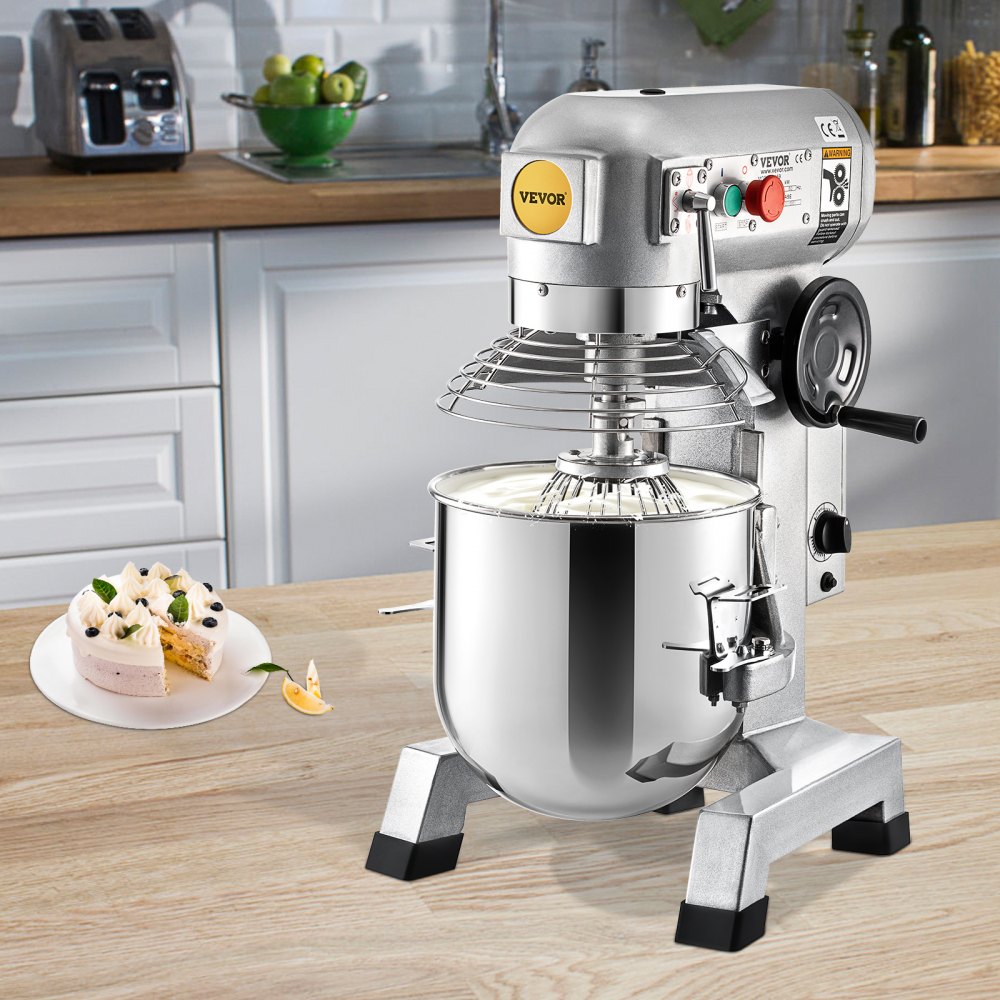
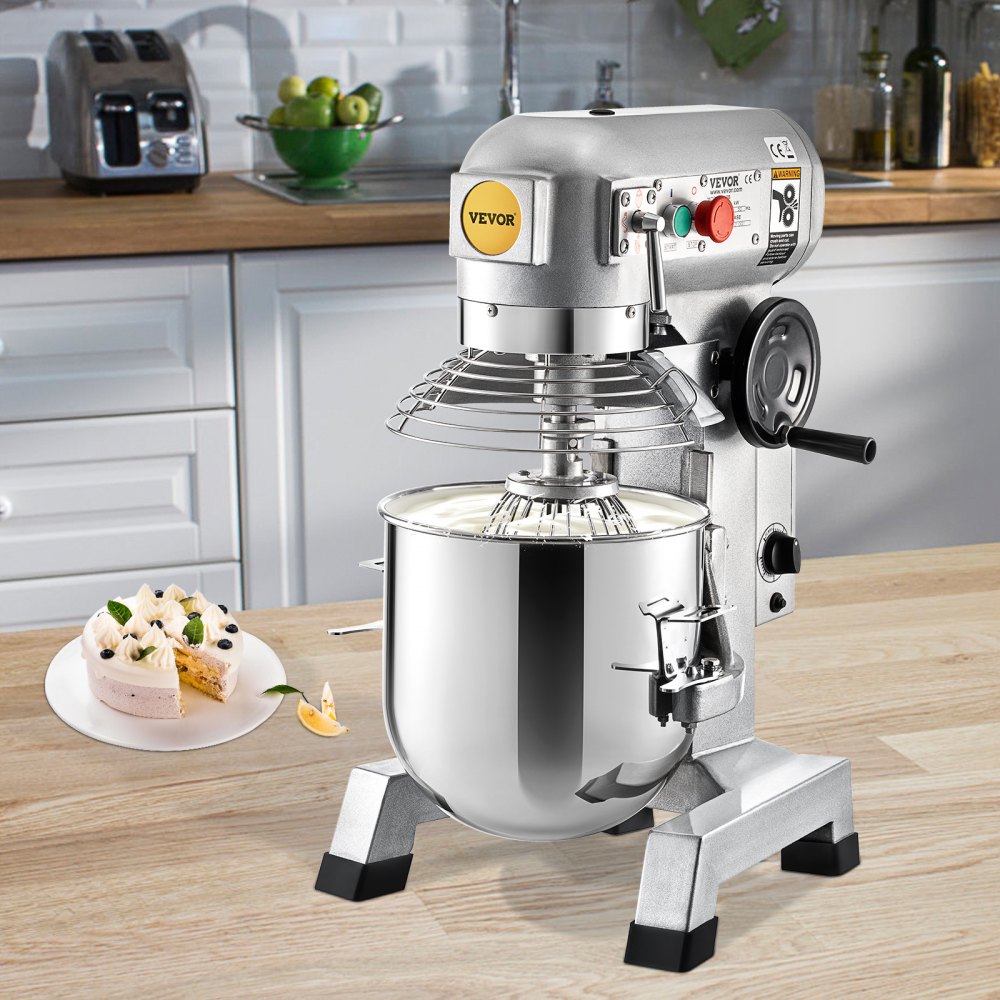
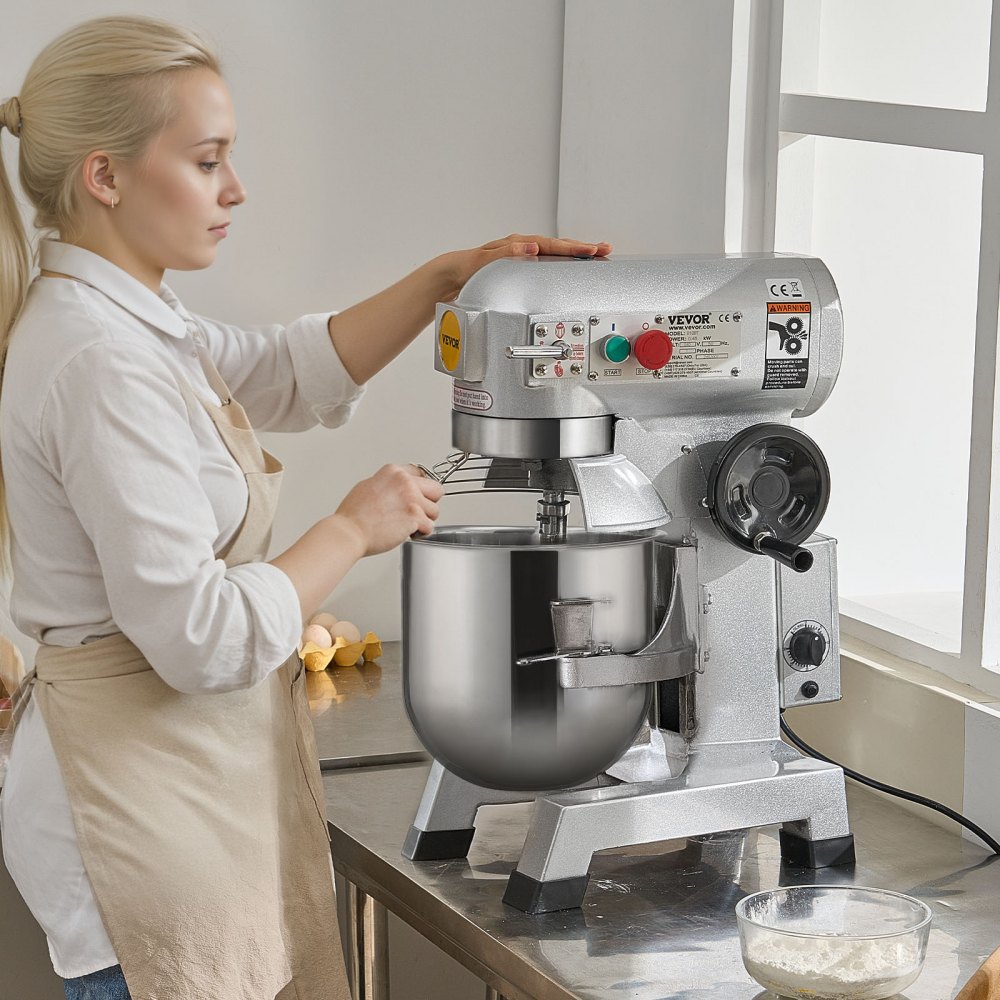
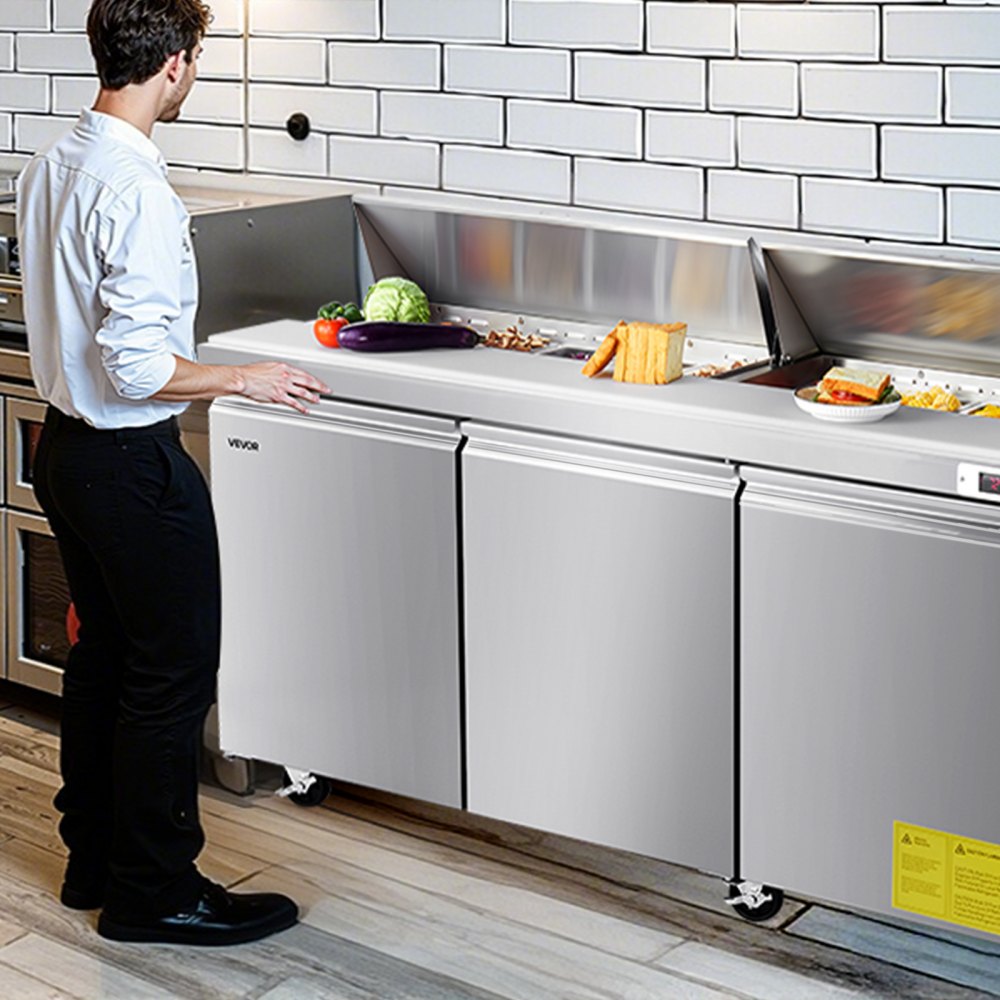
Match the oven to the bench feeding it: a 15-30 qt planetary mixer and prep refrigeration keep dough arriving on schedule. An oven is only as fast as the line in front of it.
Guide FAQ
Can I run a commercial convection oven on a normal outlet?
The half-size 1,600-1,800 W units, yes-standard 120 V. Full-size 5,000 W decks need a dedicated 208-240 V circuit.
How many racks do I actually need?
Count your worst-hour tray load and add one. If the answer exceeds 4 half-sheets, plan staggered bakes, a bigger unit, or two ovens.
Convection vs conventional baking temperature?
Start about 25 F lower than the conventional recipe and check earlier; fan air transfers heat faster.
One big oven or two small ones?
Two 120 V half-size units buy redundancy and staggered loading; one full-size deck buys throughput per cycle if the power is there.