Buying guide · Updated 2026-08-03
Drain Auger vs Drain Cleaning Machine: When to Step Up
When a 25 ft drain auger stops being enough: reach, cable size, pipe diameter, and repeat-clog triggers that justify a wheeled drain cleaning machine.
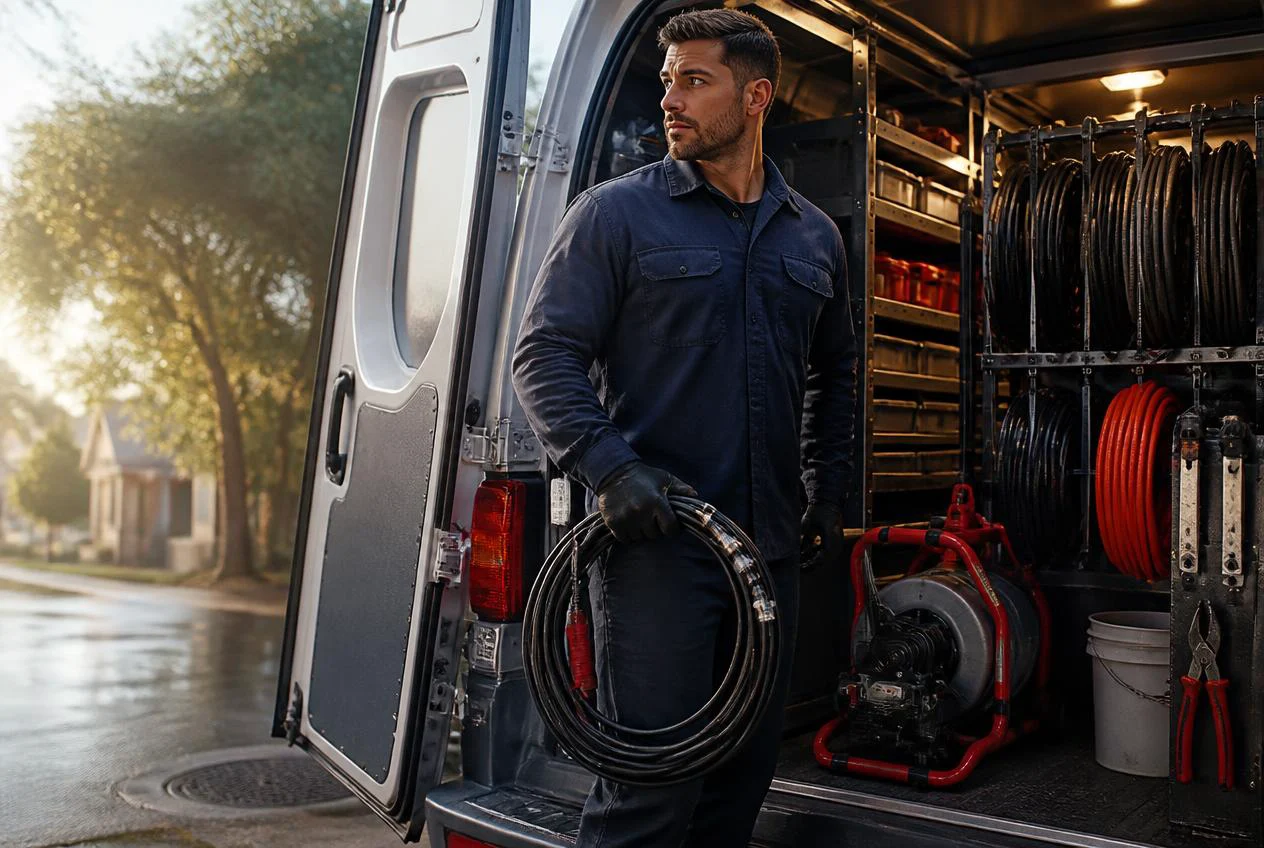
A 25-foot hand or drill auger clears most sink, tub, and shower stoppages for pocket money. The step up to a wheeled drain cleaning machine is not about effort-it is about reach, cable diameter, and the pipes you are actually cleaning.
This guide defines the concrete triggers that make the upgrade pay for itself, using the real spec bands in ForgeGate's drain line.
What a hand or drill auger is actually good at
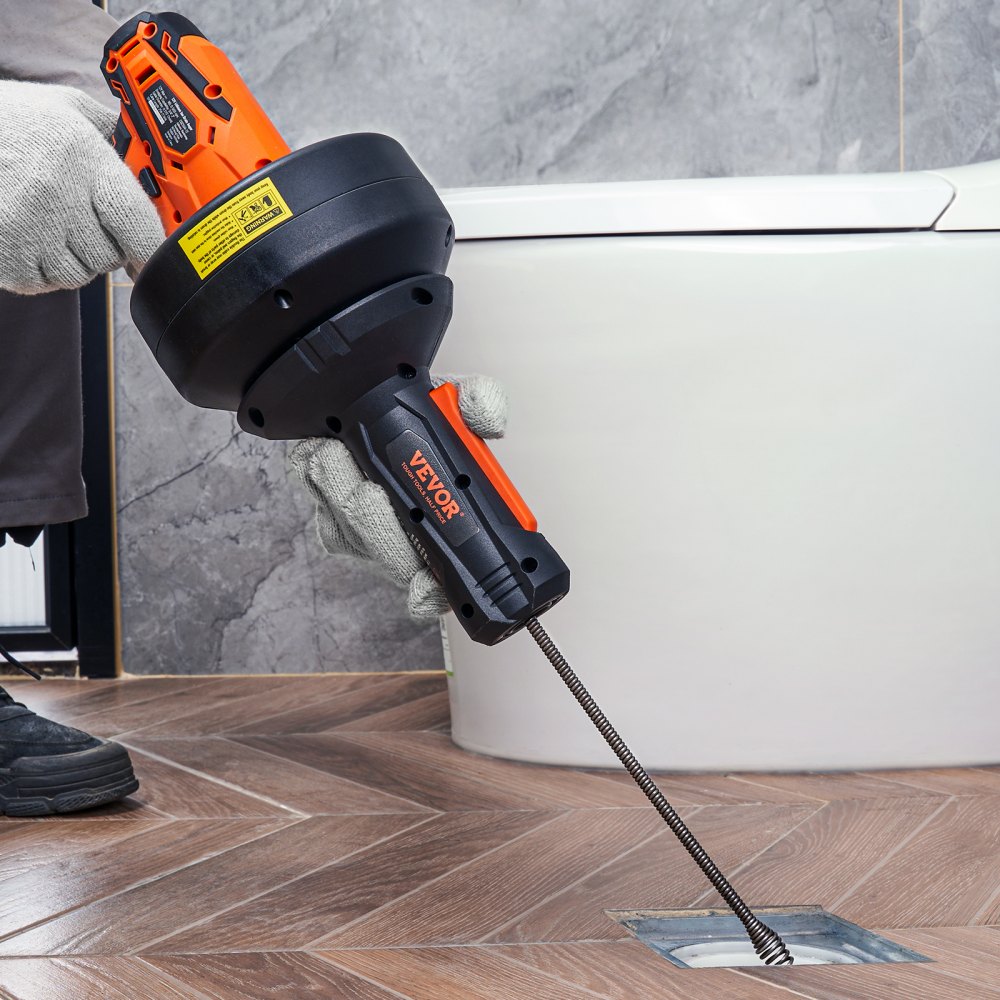
A 25 ft auger-hand crank or drill-attachment-covers branch drains from about 3/4 in to 2 in: sinks, tubs, showers, and the trap-to-vent runs behind them. The 12 V battery auto-feed versions save knuckles on repeat jobs in the same size class.
Its limits are also its spec sheet: 25 ft of reach, cable too light to fight roots, and no leverage in 3-inch-plus pipe.
Five triggers that say step up
One: the clog is farther than 25 ft from the cleanout-or you cannot reach the branch at all and must run from a main cleanout. Two: pipe diameter is 3 in or larger, where a light cable coils instead of scrubbing the wall. Three: the same drain backs up within weeks of snaking, which says roots, scale, or a belly that light cable will never fix. Four: multiple fixtures back up at once-that is the main line. Five: you do this for money, and your time is the cost.
Any single trigger justifies a machine; three or more means the machine should already be on the truck.
Cable diameter and length: the machine's real job
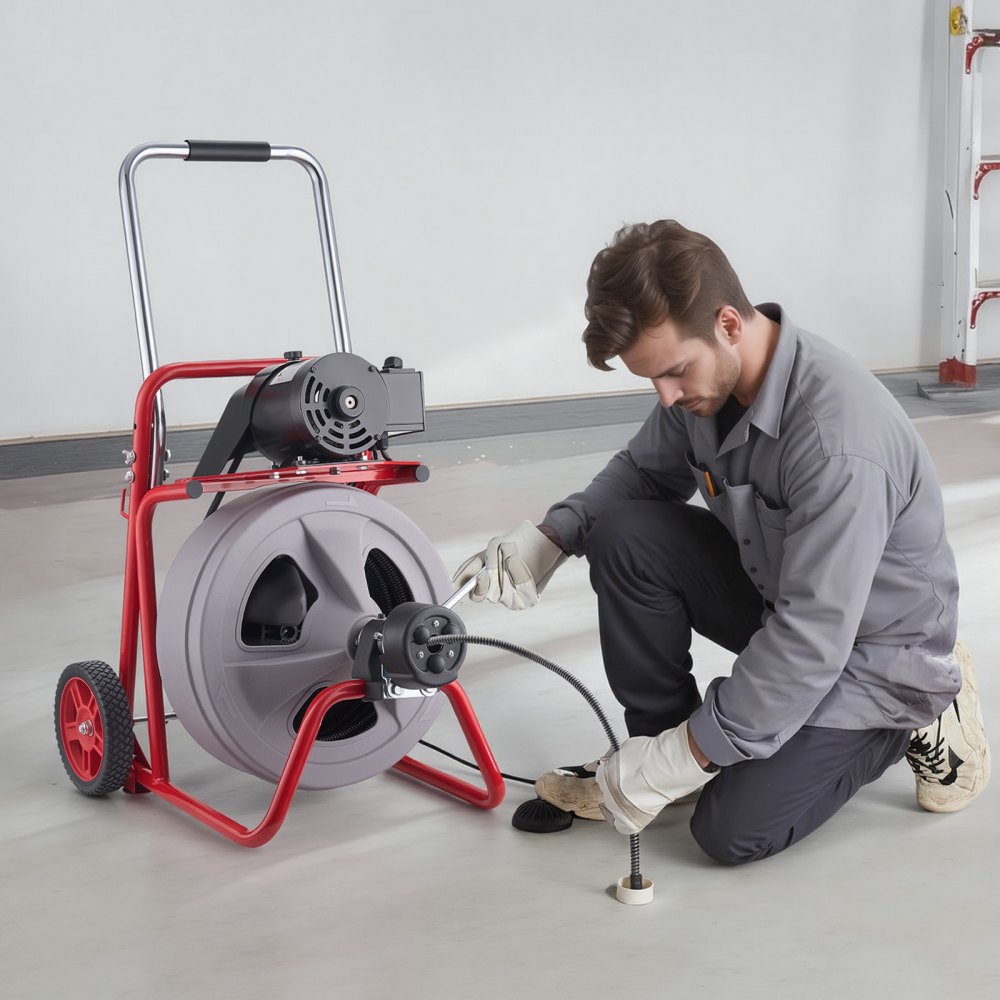
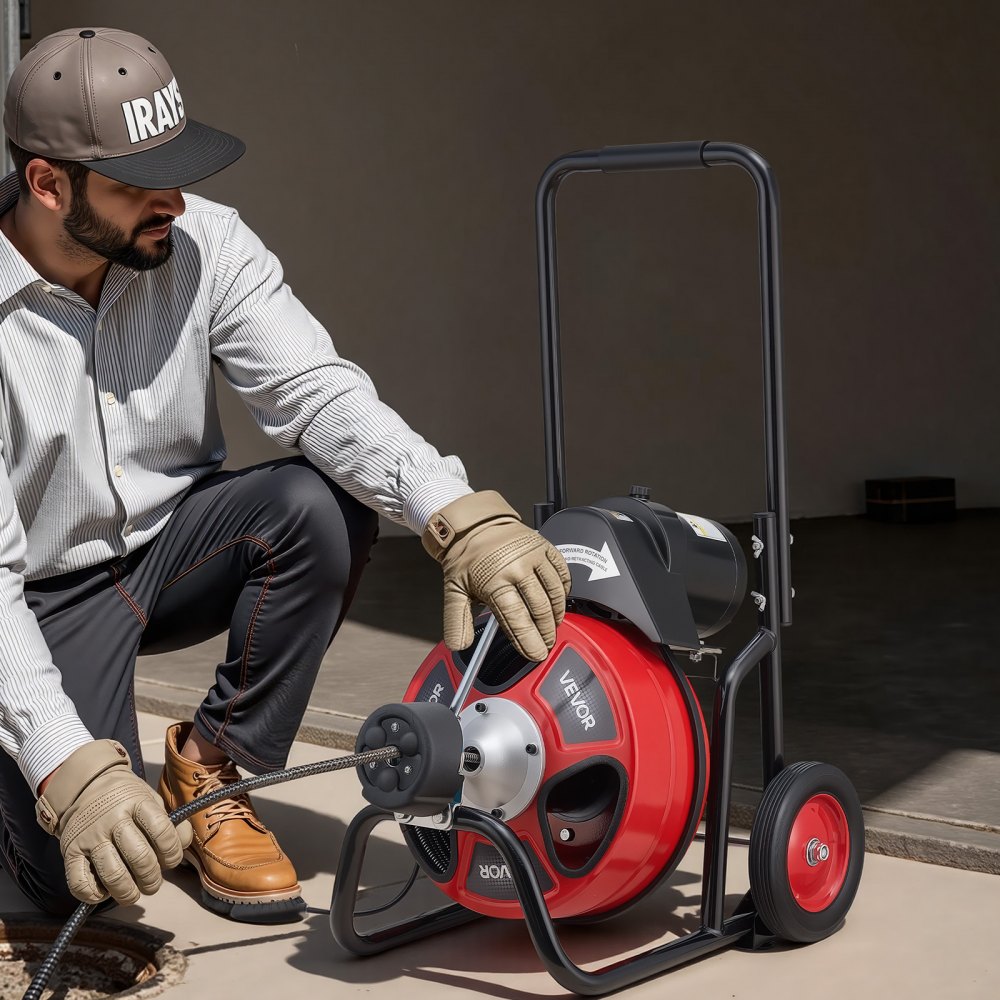
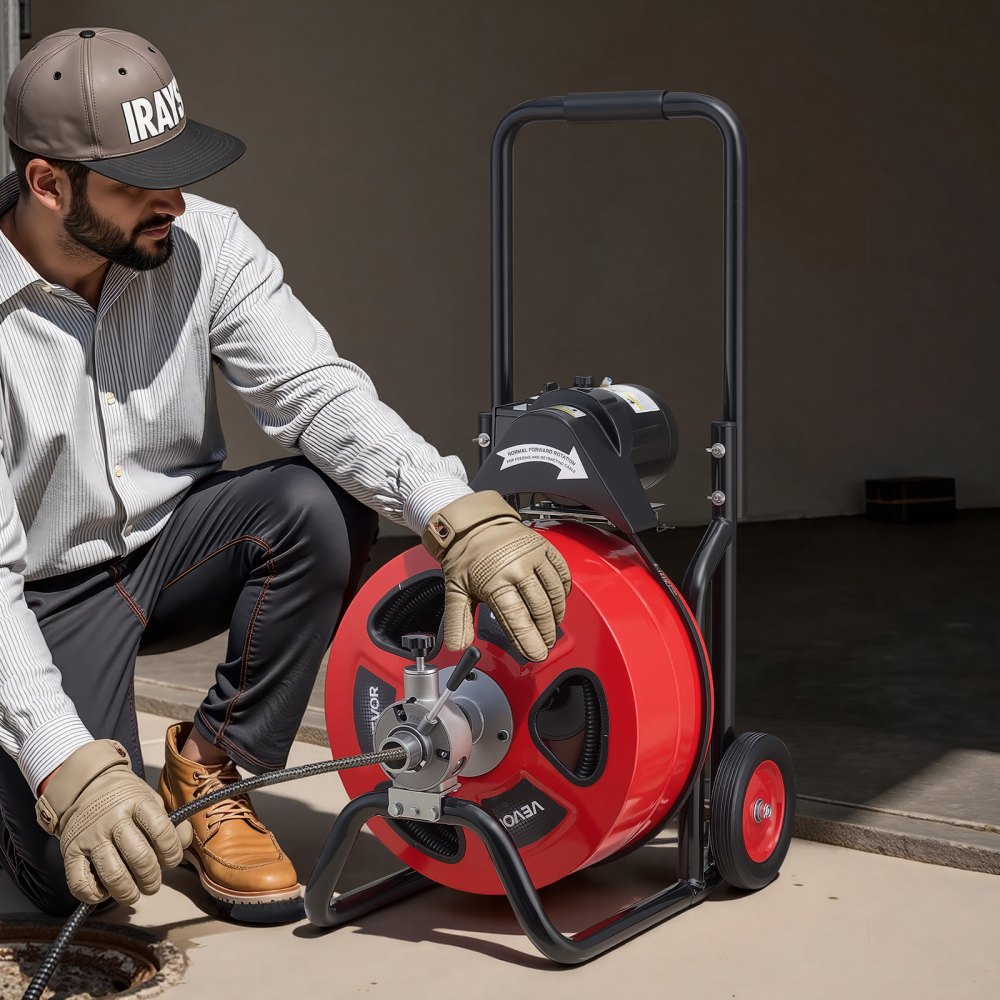
Drain machines are sold by their cable. The wheeled units in the ForgeGate line carry 100 ft reels: the 1/2 in cable is rated for 2 in to 6 in pipe, and the 3/4 in cable steps up to 4 in to 8 in mains.
Longer cable plus stiffer cable equals reach plus wall contact. A 100 ft, 1/2 in reel cleans most house laterals from cleanout to street side; the 3/4 in version is the pick when the line is 4 in or larger or root-heavy.
Auto-feed and foot switch are workflow, not luxury
The wheeled machines in this line auto-feed cable and use an air-activated foot switch, so both hands stay on the guide while the drum feeds and retracts. That is how one person runs 100 ft of cable without kinks or pinched fingers.
Cutter heads vary by kit-8-cutter and 4-cutter configurations cover hair, grease, and root tips. Match the cutter to the clog; a root cutter on a grease stoppage just polishes the problem.
Verify with a camera before you dig or repeat
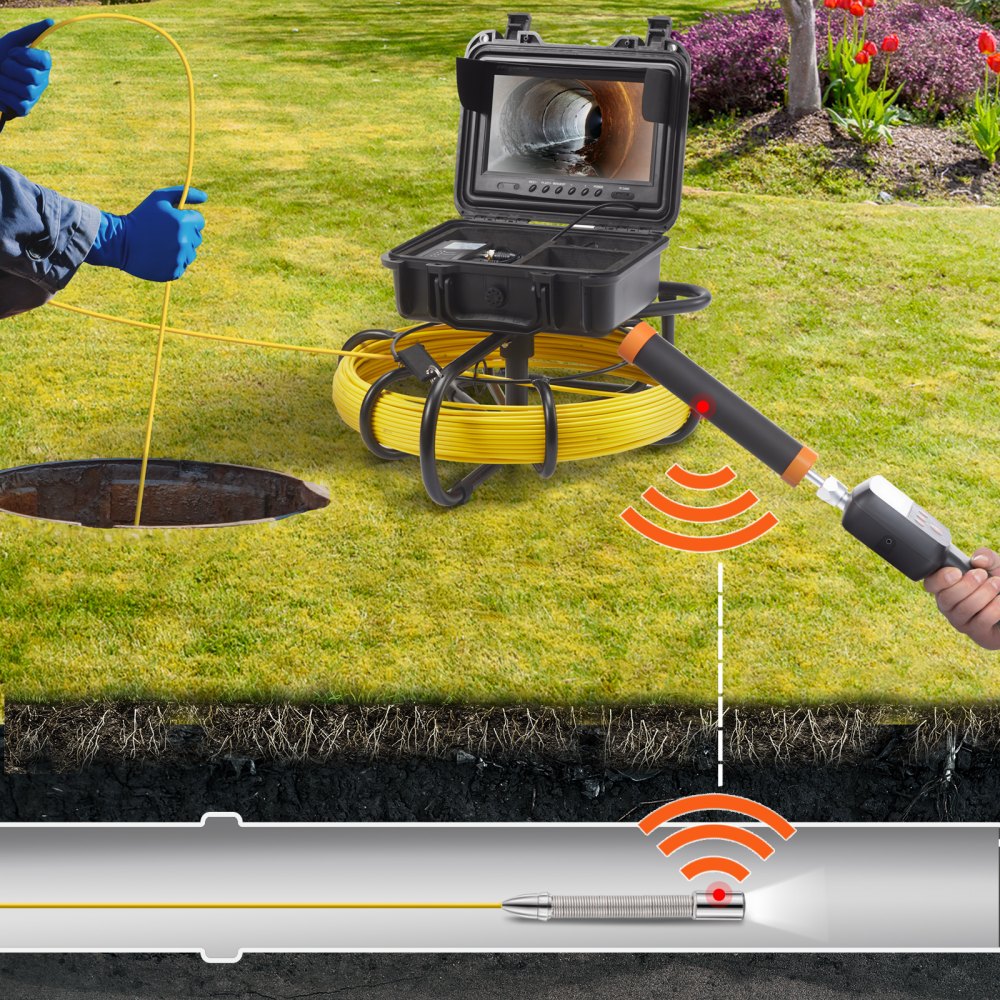
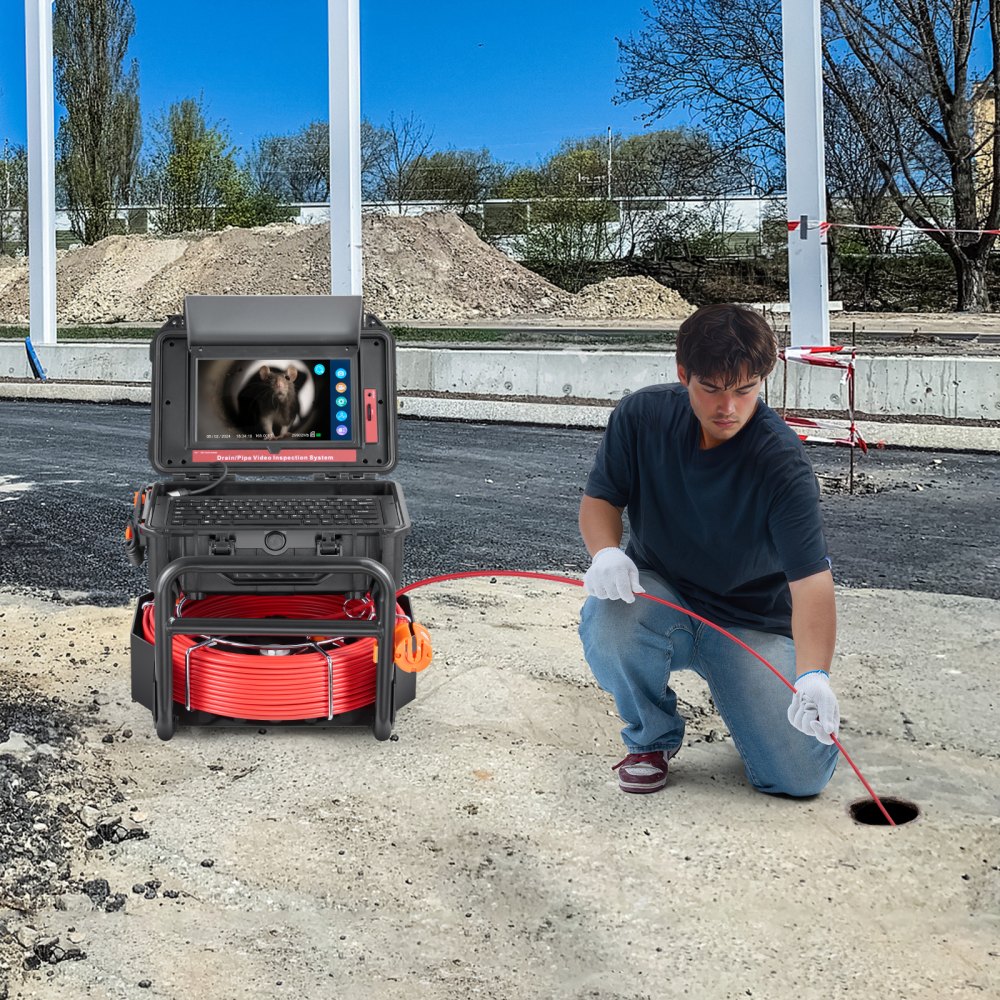
When a machine job recurs, stop buying cable time and run a sewer camera: footage tells you whether the problem is roots, a break, or a sag that no cable fixes.
A DVR-equipped camera with a 512 Hz locator turns diagnosis into evidence-recording plus a surface locate is the difference between "we snaked it" and a documented line condition.
Guide FAQ
Can a hand auger clear a main line?
Usually not: 25 ft of reach is rarely enough, and the cable is too light for 3-inch-plus pipe. Main lines are machine territory.
Should I buy the 1/2 in or 3/4 in machine?
1/2 in cable for 2-6 in house drains and laterals; 3/4 in when you regularly clean 4-8 in mains or heavy roots.
Is auto-feed worth it over a manual drum?
For repeat or long runs, yes-one operator, controlled feed, fewer kinks and hand injuries.
When do I call a pro instead of buying the machine?
If a camera shows a collapsed or badly sagged line, no cable fixes it; that is excavation territory.