Buying guide · Updated 2026-08-03
Leaf Blower Types Compared: Handheld vs Backpack vs Walk-Behind
Handheld vs backpack vs walk-behind leaf blowers compared on CFM, MPH, carried weight, and property scale, with engine-class picks for real work routes.
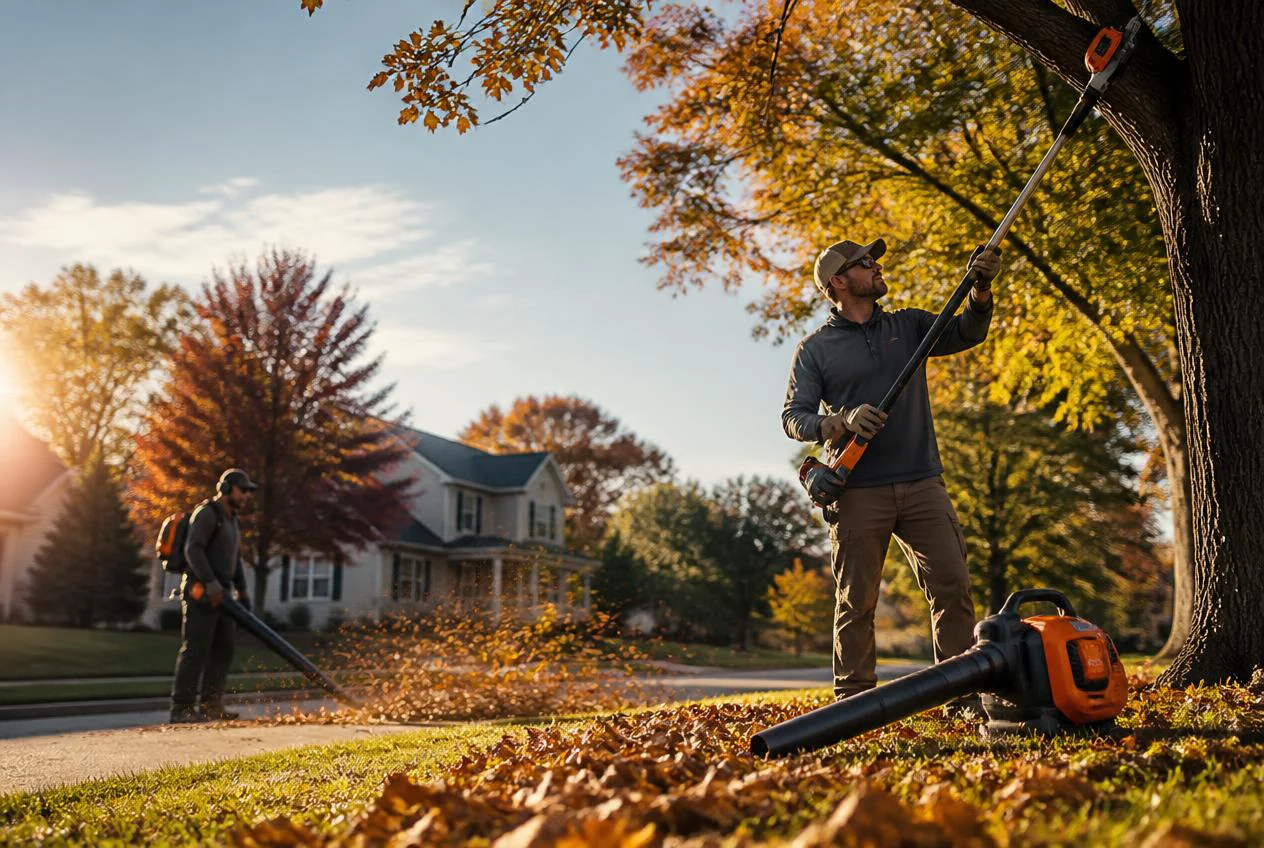
Leaf blowers come in three formats, and the wrong one announces itself within ten minutes: a handheld that stalls on wet lawns, a backpack that is overkill for a townhouse yard, or a walk-behind that cannot fit through the gate.
The decision variables are air volume (CFM), air speed (MPH), carried weight, and property scale. ForgeGate stocks the backpack end of this line-43 cc through 79 cc-so this guide maps all three formats to jobs.
CFM moves the pile; MPH breaks it loose
CFM (cubic feet per minute) is the muscle that moves volume; MPH is the velocity that unsticks wet, matted leaves from turf. Marketing loves MPH because the number is bigger, but CFM is what decides how fast a pile travels.
Reference points from the line we stock: 447 CFM at 150 MPH is light-duty territory; 930-1,110 CFM at 184-220 MPH is what moves wet oak leaves and gutter debris without three passes.
Handheld: quick work on small yards
Handhelds-gas or battery-fit driveways, patios, decks, and lawns under about a quarter acre. Their ceiling is volume and endurance: small fans, small tanks, and all the weight hanging off one arm.
If your blowing is ten minutes after mowing and edging, a handheld is the honest tool, and a backpack is money you carry on your back.
Backpack: the working default from half an acre up
Backpacks put the engine on a harness so both hands steer the tube-that is the difference that survives a two-hour fall route. Inside the format, size by engine class: the 43 cc / 447 CFM unit is the light-route and tight-space pick; the 63 cc / 1,110 CFM unit is the volume king for wet leaves; the 79 cc / 930 CFM trades some velocity for a 3 L tank that runs longer between refuels.
Tank size is underrated on long routes: 1.38 L versus 3 L is roughly the difference between refueling twice and once on a big-property pass.
Walk-behind: parking lots, acreage, and municipal piles
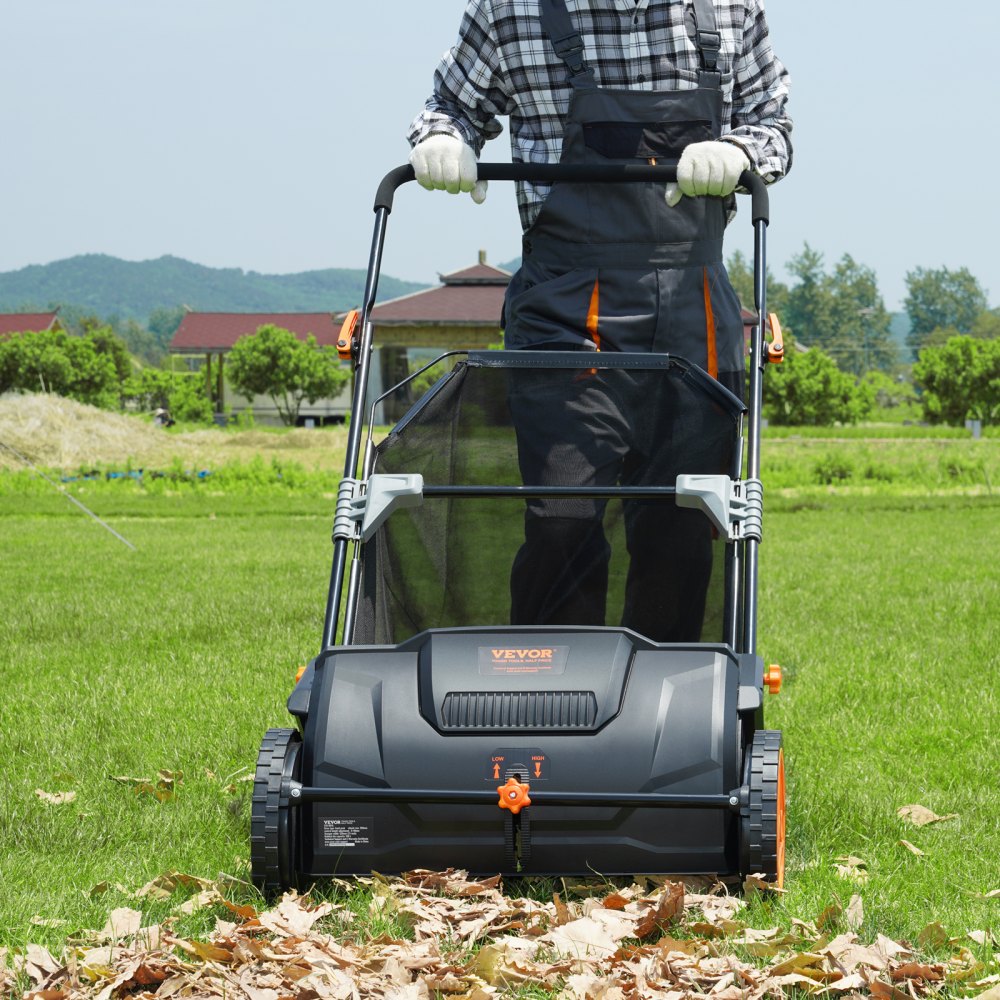
Walk-behind blowers exist for turf acreage, lots, and stadium-level leaf volumes: huge CFM on wheels, nothing carried. Their limits are transport, storage, and the fact that they cannot climb stairs or thread fence gaps.
For most property owners, a walk-behind is a rental or a contractor's tool. If you only need it two weekends a year, rent it and own the backpack.
Fuel, noise, and neighborhood thresholds
Two-stroke gas blowers want correct mix per the manual and fresh fuel; stale gas is the top cause of spring no-starts. Battery handhelds skip the mix at the cost of runtime.
Noise is a spec too: check local ordinances-many cap blower decibels or hours of use. A 63 cc blower at full chat is not a 7 a.m. tool in a dense neighborhood; plan the route accordingly.
Guide FAQ
What CFM do I need for wet leaves?
Plan on 800 CFM and up; the 930-1,110 CFM class moves wet, matted leaves without repeat passes.
Is a backpack worth it over a handheld?
Past roughly a quarter-to-half acre or any commercial route, yes-the harness converts engine weight from arm fatigue into hours of work.
Why does my blower lose power when hot?
Common causes: stale or wrongly mixed fuel, a dirty air filter, or a restricted spark arrestor. Check the cheap chemistry before blaming the engine.
Gas or battery for a small yard?
Battery handhelds are fine under a quarter acre with light debris; gas wins on runtime and sustained airflow for bigger or wetter jobs.